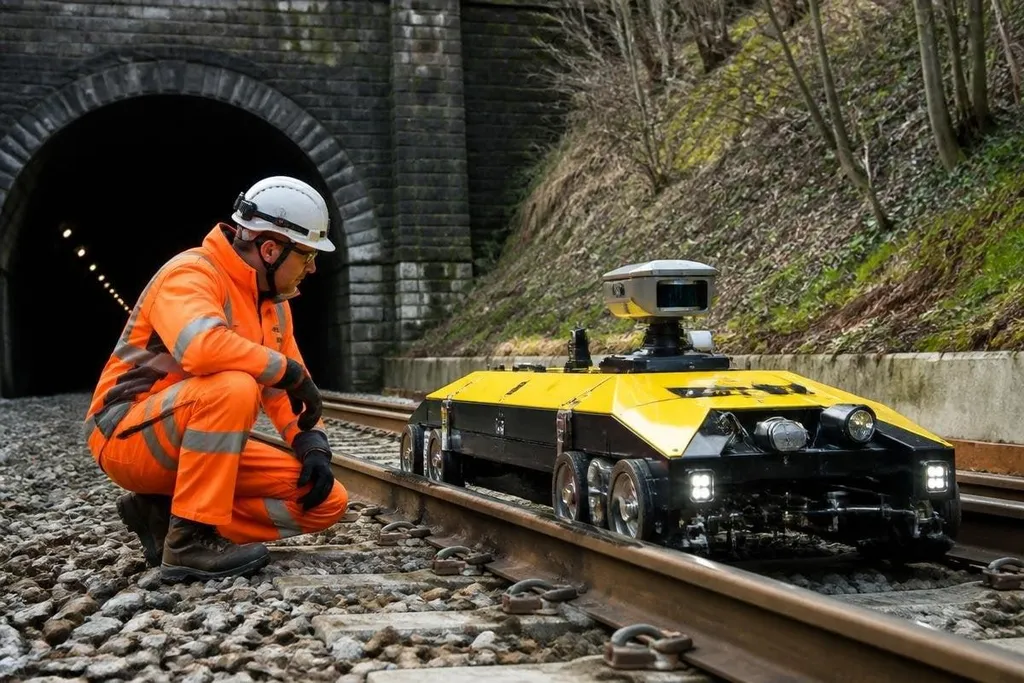
Railway robots can inspect track, check tunnels, move through yards, and collect data without putting a worker on the line. The business opportunity sits in the work around those machines: hardware, inspection services, software, training, and repair.
For a railway operator, the useful question is simple: which task costs time or exposes workers to risk, and can a robot handle part of it safely?
Quick read
- Inspection robots can sell as machines, services, or data tools.
- The buyer will care about access time, false alarms, and repair support.
- Human control and railway approval remain part of the product.
Where the work is
Track inspection is the clearest starting point. The inspection unit can carry LiDAR, cameras, or an ultrasonic probe to check rails, sleepers, fasteners, and the space beside the track. The output is a record for a human inspector, not a replacement for every inspection decision.
That difference creates several possible products. A company can sell the robot to a railway, send trained staff to run inspection trips, or charge for reports from each route visit. The third option may suit operators that need inspection data but don't want to own another fleet.
The same model can apply inside tunnels and stations. Inside a tunnel, a thermal camera may find heat from electrical equipment, while a camera system records cracks, water leaks, loose fittings, or blocked access points. The value comes from finding a fault early enough for a planned repair window.
Rail yards offer another line of work. Autonomous systems can carry tools, inspect parked wagons, check wheel condition, or move small loads across a controlled area. These jobs need geofencing, obstacle detection, and a clear stop command because people, trains, and service vehicles share the same space.
The hardware sale is only one route. A railway robot business could rent machines for seasonal inspection work, run inspection crews that review readings and send signed reports, or sell software that stores images, sensor readings, fault locations, and repair history.
It could also sell retrofit kits with cameras, LiDAR, or wireless links for vehicles the railway already owns. Service contracts can cover batteries, sensors, software updates, training, and repairs.
Each route changes the buyer's risk. A rental spreads the cost across projects, while a service contract gives the operator one supplier for the machine and the work around it. A software product can reach more sites, but it still needs clean data and people who can check its results.
Railway robot deals need more than a working machine; buyers need proof that the task can pay for itself. Railway robotics business reporting can show the operator, route, robot model, test date, and result behind a claim. The next section looks at practical barriers, including track access and safety rules, that can stop a sale before a pilot starts.
The parts that can stop a sale
Railways run on strict access rules and fixed work windows. A robot that needs a long setup period may lose its value before it reaches the track. The seller needs to show how the system arrives, starts, collects data, stops, and leaves without delaying a train or maintenance crew.
False alarms create another cost. If a camera marks every stain as a rail defect, a person must check too many reports. A good product needs a clear record of what the sensor saw, where it saw it, and why the software flagged it.
Connectivity can fail in tunnels, cuttings, and remote sections. The robot may need local storage, a safe return mode, and a physical emergency stop. Human oversight still matters when the route, weather, or work site falls outside the system's tested limits.
The proof burden also reaches beyond the robot. Buyers may ask for maintenance records, battery procedures, cybersecurity controls, insurance, operator training, and a plan for parts after the first sale.
A polished demo can't answer those questions.
A buyer's decision checklist
Use these checks before funding a pilot:
- Name the task: Record the exact job, time window, staff count, and present cost.
- Set the handoff: Define where a robot stops and a person takes over.
- Count false alarms: Test the report review time, not only the sensor result.
- Check the route: Include tunnels, poor signals, crossings, gradients, and shared work areas.
- Price the service: Add training, batteries, repairs, data storage, and approval work.
- Set a pass mark: Decide the inspection coverage or time saved that earns a wider trial.
I'd back railway robots first in narrow, repeatable jobs where the operator can check the result without stopping normal service.
That points to a practical market: fewer grand claims, more paid inspection runs, clear fault reports, and service records that show what happened on the track.